Showing posts with label Raspberry Pi. Show all posts

Saturday, April 7, 2012


Raspberry Pi

Testing’s done!


Good news! We just received confirmation that the Raspberry Pi has passed EMC testing without requiring any hardware modifications.
As you may know, we’ve had periods booked in a testing chamber at Panasonic’s facility in South Wales for the whole week. Jimmy, Craig and Gareth from Gainspeed, our EMC consultants (with assistance from Phil the EMC lab manager, occasional assistance/hampering from Eben and the aid of many Asda sausage sandwiches), have been working into the evenings, and lost their Good Friday holiday to get all the testing finished. There is still a mountain of paperwork for us to sign, and that then has to be looked over by RS Components and element14/Premier Farnell; but that’s a piece of cake compared to what we’ve been doing all week. Given that we’ve had the chamber for the whole week, we’ve used the time to make sure that alongside the CE requirements, the Raspberry Pi also complies with FCC regulations (USA) as well as CTick (Australia) and what we’ve been calling “that Canadian thing”.
The Raspberry Pi had to pass radiated and conducted emissions and immunity tests in a variety of configurations (a single run can take hours), and was subjected to electrostatic discharge (ESD) testing to establish its robustness to being rubbed on a cat. It’s a long process, involving a scary padded room full of blue cones, turntables that rise and fall on demand, and a thing that looks a lot like a television aerial crossed with Cthulhu.
A cute story. Radiated immunity testing involves hitting the Raspberry Pi hard with narrow-band EM radiation, while checking (amongst many other things) that the device is still able to send Ethernet frames to a hub. The first time the team did this, the light on the hub stopped blinking: no frames were making it through. They did it again: still nothing. Finally, they discovered that the hub (which, I should point out, gave every appearance of being CE marked, so it should have been able to get through these tests itself) was being knocked out every time somebody pressed the button. Jimmy used a longer cable, put the hub outside the field, and found that the Raspberry Pi got through its immunity tests with no problems at all.
Finally, there’s small change to the legal gubbins. I know some of you felt like I did about the paragraph in our trademark rules which said that in products and websites, the words “Raspberry Pi” should only be used as an adjective to avoid genericisation – namely that it was a bloody stupid idea. This thing’s called a Raspberry Pi, not a Raspberry Pi computer. We at the Foundation call the computer a Raspberry Pi in conversation. So does everybody we’ve spoken to about it. We don’t abbreviate it to Raspicomp, but to Raspi or RP; none of the mountains of press coverage we’ve had have used Raspberry Pi adjectivally. So we had a chat about it; reminded ourselves that advice we get from our legal team is just that: advice, not binding instruction; and we’ve removed the paragraph from the trademark rules.



o
Share/Bookmark

Tuesday, March 6, 2012


Raspberry Pi demand running at '700 per second'


Programming device has also attracted interest from a Middle East country planning to give one to every schoolgirl
Demand for the Raspberry Pi computer – a £22 British-designed system – was still running at 700 per second at the end of last week, according to one of its main distributors in the UK.
The device, intended to make programming simple and accessible for children much as the BBC Micro and Sinclair Spectrum did in the 1980s, has also attracted interest from a Middle East country which plans to issue one to every schoolgirl, said Harriet Green, chief executive of Premier Farnell, which is selling the device via its site.
"It's interesting to look at why there's so much excitement around Raspberry Pi," said Green. "I think that a lot of teachers, parents and children are worrying that they're becoming just consumers – taking something out of a box and plugging it in. There's a lot of points of concern about children being just consumers rather than creators and innovators."
The Raspberry Pi, whose price is fixed by the charity that controls it at $35 (and then adjusted locally via exchange rate), has already sold its initial production run, of around 10,000 units, which were sold through two companies, Premier Farnell and RS. "Demand was 20 times greater than our supply," said Green. But the price will not be raised; the company will simply increase production as far as it can to meet demand. "There's a relationship between ubiquitous supply and how much it costs," said Green. "If you go back to the days of Amstrad and the success it had, you realise that there's a great skill in getting the price right." She says the design itself is "beautiful" but "doesn't cost much to make" – leaving enough profit to make it sustainable.
The first version of the device, which sold out within minutes of going on sale on 29 February, is a simple circuit board without packaging, and will go to developers so that they can write supporting code which can then be preinstalled on to later versions, expected to go on sale in the autumn with proper packaging.
Besides interest in the UK, Green said that there had also been interest from a Middle East government which wanted to give one to every schoolgirl in order to enhance their job prospects. She declined to name the country, but said "the inclusion of girls is very important. A survey a couple of years ago which asked women aged 13 to 18 what they wanted to be, and it was quite salutary to read the results. The primary thing they wanted to be was a superstar or a Wag. There weren't any wanting to be businesswomen, lawyers or journalists. I'm not a programmer, but it isn't hard with the right capability."
She thinks that there is even the possibility for the ultra-cheap device – which has connectors for a keyboard, display, network and USB devices such as a hard drive – to have a "subversive" effect on the entire PC industry. "There's absolutely nothing to prevent the likes of Apple or Dell or Lenovo or HP from doing something similar to us," Green said, adding "I would really encourage the major companies to have a look at the power of this idea."
While the Raspberry Pi does not have the fastest or most powerful central processor available – relying instead on one that would typically be found in a smartphone, using the Arm architecture designed by a team that originally worked on the BBC Micro – Green thinks that it has the potential to grow enormously.
She says too that social media and online communities have helped keep interest in the project high. A programming community called Element 14 – the atomic number of silicon, a key material in chips – has grown up around the interest in writing programs for the device: so far there have been 30,000 downloads of the operating system software for the device, an order of magnitude more than have actually been made.


o
Share/Bookmark

Thursday, March 1, 2012


Raspberry Pi announces new partners


The Raspberry Pi Foundation, creator of the Raspberry Pi ARM-based tiny computer that sells for $25, has announced that it has signed up Premier Farnell and RS Components as licensed manufacturers of the devices. The Foundation explained that the new model would remove the limitations of its previous supply model which meant it could only do batches of ten thousand Raspberry Pis a time, and that from now on, the device would be manufactured to meet demand. The Foundation will make a small profit from each Raspberry Pi sale which will be put back into the charity to help it achieve its educational mission.
The first indication of that demand came when the two companies also had the first batch of 10,000 Raspberry Pi Model B boards available for sale at 6am GMT this morning; their web sites were almost immediately swamped by buyers for the devices. Farnell sold out their allocation in less than an hour despite patchy web site availability and started taking pre-orders, while RS Components' web site now appears to only be taking registrations of interest for the Model B version of the device, priced at £21.60+VAT. It is reported that RS will start selling the board at the end of the week. The devices themselves are still in transit from their manufacturer in China.
The Foundation also announced that the Model A, the $25 version which is the more compact of the two versions but lacks the Ethernet port and USB ports of the Model B, has been upgraded to 256MB of RAM to match the Model B. Model Bs will be available first as this phase of the launch is aimed at software and hardware enthusiasts and others who want to create software for the device. The official educational launch is scheduled for later this year by which time the Foundation hopes that there will be an experienced community of Raspberry Pi users and more mature and bug free software for children and educators to use.
Although Raspberry Pi boards are designed with open source software in mind, with a remix of Fedora Linux being developed for it, the boards themselves are not open source hardware. The Foundation hopes to make the board open later on, with a release of the whole design, but is concentrating of building a sustainable educational foundation.


o
Share/Bookmark

Wednesday, February 8, 2012


Raspberry Pi's $35 Linux computer on track to launch later this month


The first model of the Raspberry Pi Foundation's low-cost Linux computer will likely be available for purchase later this month. The organization announced today that manufacturing on the first batch is set to complete on February 20.
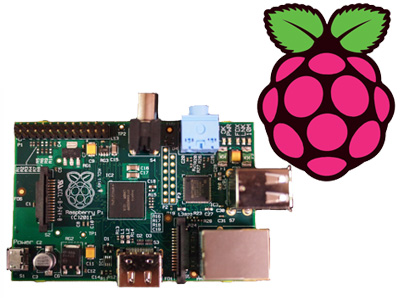
The $35 computer, which is a bare board the size of a deck of playing cards, has a 700MHz ARM11 CPU and 256MB of RAM. A second model with lower specs will eventually be released for $25. According to a statement issued today by the Raspberry Pi Foundation, the $35 model will probably be available for purchase by the end of the month unless there are additional production delays.
We reported on the Raspberry Pi computer last month when manufacturing was set to begin. Completion of the first batch was delayed because the manufacturer had difficulty sourcing a component. The issue was resolved and production resumed.
In addition to announcing the expected ate of completion for the first batch, the Raspberry Pi Foundation has also announced the availability of technical documentation from Broadcom with details about the SoC used in the Raspberry Pi board. The document is available for download as a PDF file.


o
Share/Bookmark